
The Light Fantastic
No tripping necessary

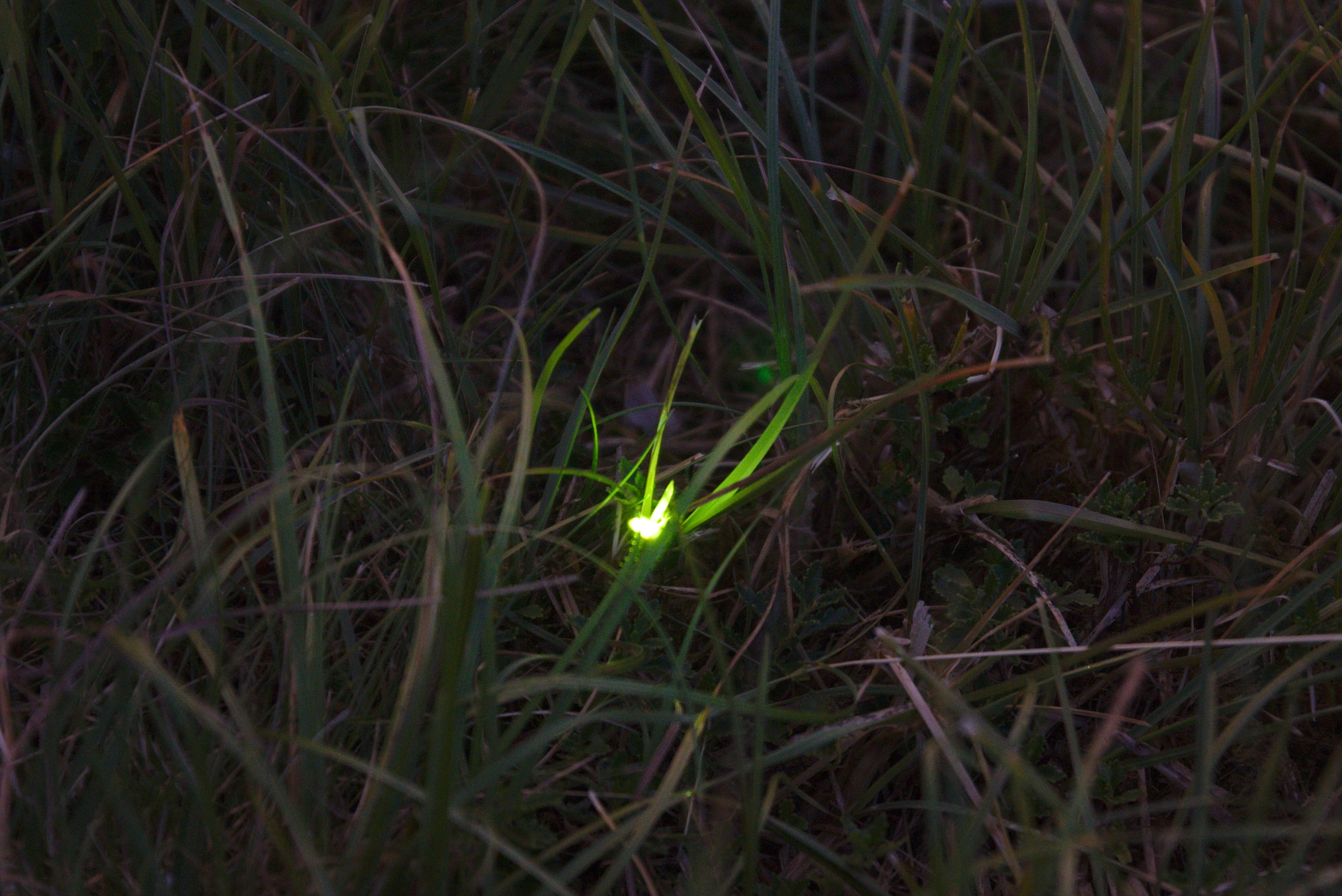
For a few weeks every year, around this time in May and June, the garden and grove welcome one of my absolute favourite visitors of all: le lucciole, Luciola italica, our native Italian fireflies. Out of the darkness, pulsing yellow-green lights drift through the dimness of the garden, creating fluorescent trails that instantly entrance anyone lucky enough to witness them. They move steadily in floating arcs amongst the olives and around the figs, often gathering most densely down in the orto where the moisture lingers longest. You can approach them, get close, even have them land upon you, their intermittent flashes revealing the small, otherwise unremarkable beetle producing such magic. One of the great joys of living here has been witnessing the reaction of both children and adults when they encounter this fragment of nature’s fireworks for the first time.
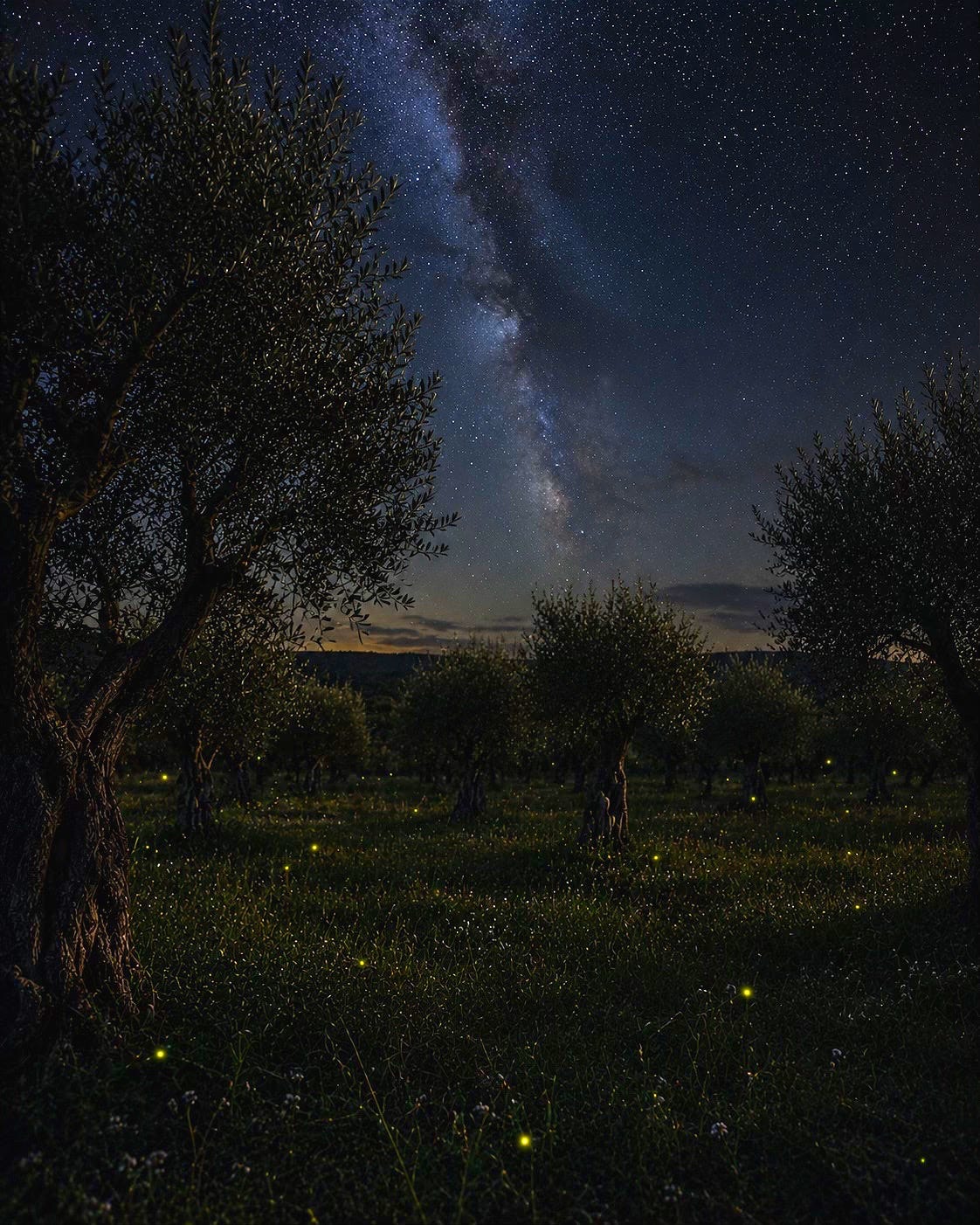
As a matter of principle, I go dark, turning off all the lights from the house and trying to camouflage myself as the ancient dance of these miraculous creatures plays out. Luciola italica, despite the name, is not strictly endemic to Italy, stretching across parts of southern and central Europe, much like the Italian wolf, Canis lupus italicus, whose range today extends well beyond the peninsula itself. Yet it remains deeply associated with the Italian landscape and is one of the commonest fireflies across much of the bel paese.
In reality it is merely a small beetle with a brief adult lifespan, whose existence passes almost entirely unnoticed beneath grasses and hedgerows, its larvae feeding quietly on snails and other soft-bodied invertebrates in damp soils. Evolution, however, has bestowed upon this modest insect one of the strangest powers in all nature: the ability to manufacture light from its own body.
The glow of Luciola italica is produced inside specialised organs in the abdomen, where a molecule called luciferin reacts with oxygen under the control of an enzyme known as luciferase. The reaction produces almost no heat at all: a “cold light” so efficient that human technology still struggles to imitate it. Yet what appears to us as beauty is, to the insect, a matter of survival and desire. On warm evenings in late spring, males drift slowly through the olive groves, their lanterns pulsing against the darkness, while the hidden, largely flightless females answer from the long grass below. This is, quite literally, their moment to shine.
Once coupled, the insects mate almost immediately, clinging to leaves, olive branches and tall grasses as their lanterns continue to glow rhythmically through the darkness: nature’s own furtive late-night encounter unfolding beneath flashing green lights. Soon the females descend once more into the vegetation below to lay their eggs amongst damp mosses and grasses, beginning again the hidden phase of a roughly two-year life cycle that unfolds largely out of human sight. Weeks later, when the eggs hatch, even the larvae themselves emit a faint glow beneath the soil and leaf litter, tiny dots of bioluminescence concealed within the undergrowth long before the adult fireflies rise once more into the summer air.
The brief spectacle we witness in the olive groves each May and June is therefore only the final visible chapter of a much longer subterranean existence. For the males it is the last luminous flourish, many dying only days after mating, while the females linger just long enough to lay the next generation amongst roots and leaf litter below. What emerges before us each evening is thus a fleeting eruption of light, communication and desire at the end of an otherwise routine life spent hidden in the undergrowth.
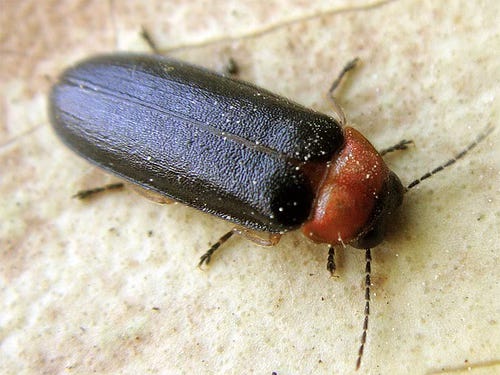
Fireflies belong to the family Lampyridae, a group of soft-bodied beetles, most of them bioluminescent at some stage of their life cycle, comprising more than two thousand known species distributed across the world, particularly in warm and humid climates. Tropical Asia and South America contain by far the greatest diversity of fireflies, with Brazil alone home to several hundred species. Yet for a temperate European country, Italy possesses an unusually rich firefly fauna: around seventeen to twenty-one species have been recorded across the peninsula and islands, compared with only two in Britain and three in Germany. Several species and local forms occur only in Italy, especially in Sardinia and parts of the south, where long periods of geographical isolation fostered endemic lineages over evolutionary time.
Old Light
Bioluminescence is one of the most wondrous sights in nature and has a far wider and deeper evolutionary story, originating at sea and probably going back many hundreds of millions of years. Long before forests, flowers or vertebrates existed on land, the ancient oceans were already alive with cold light. Some scientists believe the first luminous organisms may have been marine bacteria drifting through Precambrian seas, their chemistry accidentally producing faint glows that evolution gradually transformed into one of nature’s most brilliant inventions.
Over immense stretches of time, living light emerged repeatedly across the tree of life: in plankton that flashed when disturbed, jellyfish pulsing through black water, squid and deep-sea fish dangling luminous lures before their mouths. Again and again, evolution discovered that light could become useful. It could lure prey, confuse predators, attract mates or allow creatures to recognise one another in darkness where sunlight could no longer penetrate.
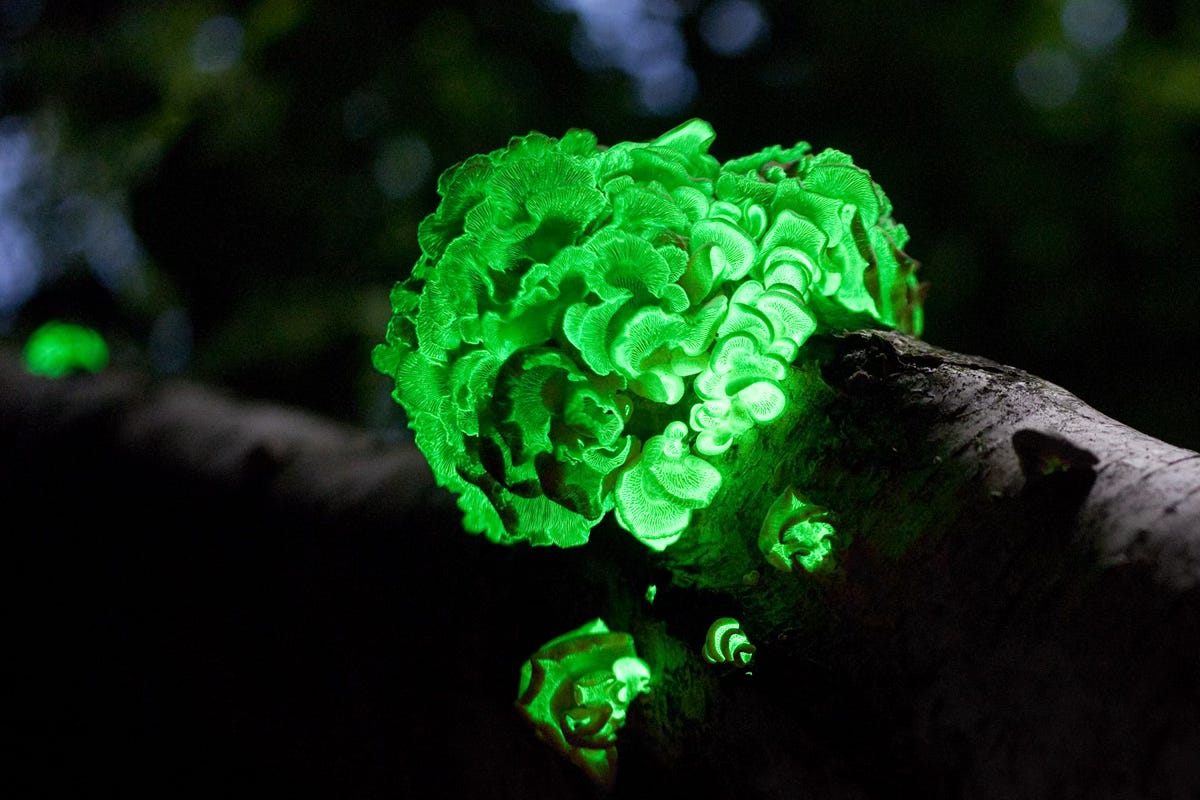
When that light escaped the oceans, it evolved independently upon the land amongst fungi, glow-worms and the ancestors of modern fireflies, until forests, meadows and river banks began to bask in the glow of bioluminescence. In certain damp woodlands today, luminous fungi still glow softly from rotting trunks and leaf litter; ghostly green foxfire settling across dead branches that seem almost to weep fluorescence. Long before science fiction imagined luminous forests such as those found on Pandora, the Earth had already invented them.
The luciole drifting now through Italy are the heirs to an immensely ancient evolutionary story. The lineage leading to modern fireflies likely stretches back more than one hundred million years, to the age of the dinosaurs, when luminous beetles were already flickering through the warm forests of the Cretaceous world. During the great climatic oscillations of the Ice Ages, the Italian peninsula itself likely became one of the southern refuges where these ancient luminous lineages endured while much of northern Europe grew colder and ecologically impoverished. They almost certainly existed in forms stranger and more varied than we can now fully reconstruct, their vanished lights surviving now only as fragments in stone and deep evolutionary time.
Embrace the Dark
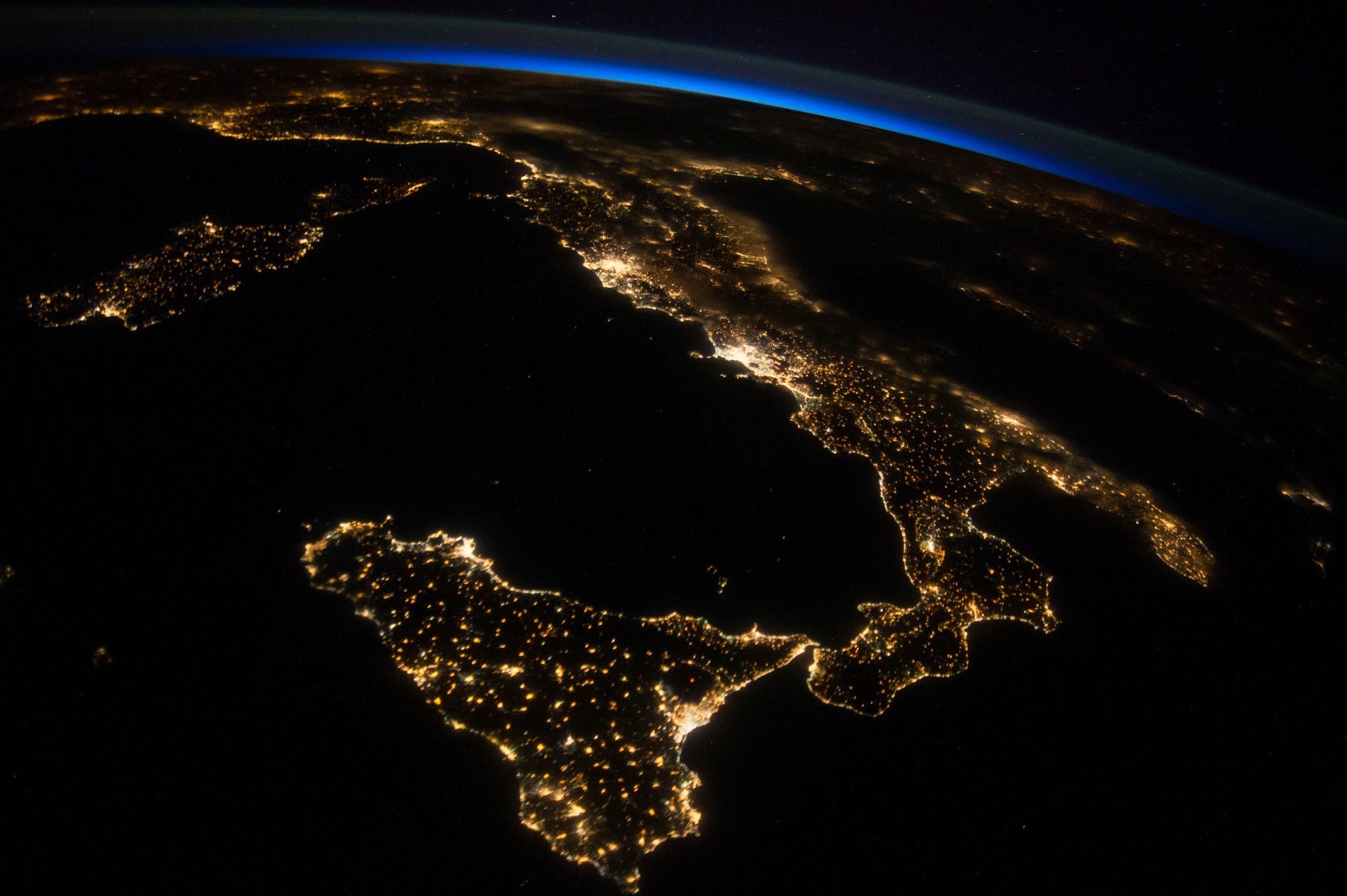
Luciole are increasingly regarded as indicators of ecological health, dependent not merely on darkness but on the survival of complex, low-intensity landscapes rich in moisture, insect life and undisturbed vegetation. Their presence in the olive groves suggests that the land here still retains a considerable degree of biological richness, relatively untouched by pesticides and blessed, too, with something becoming ever rarer in modern Europe: true darkness. Here in Maremma, at least for now, fragments of the night sky still survive, something increasingly uncommon across much of Italy, one of the most light-polluted countries in Europe.
Fireflies evolved to communicate in darkness, their flashes part of an ancient nocturnal language refined over millions of years. Streetlights, security lamps and illuminated suburbs interfere with these signals, blurring the distinction between night and day, while pesticides and habitat loss further erode the delicate ecologies upon which they depend. In many parts of Europe they have declined sharply alongside insects more generally, vanishing from places where they were once abundant.
Perhaps, then, what moves us most is not merely the beauty of the spectacle, but what it implies about the world around it. To encounter fireflies still in large numbers is to encounter something increasingly rare: not simply an insect, but a functioning night. Beneath our olives, amongst rough grasses alive with crickets and moths, ancient conversations of light continue much as they have for countless generations, surviving still within pockets of darkness that much of the modern world has forgotten.
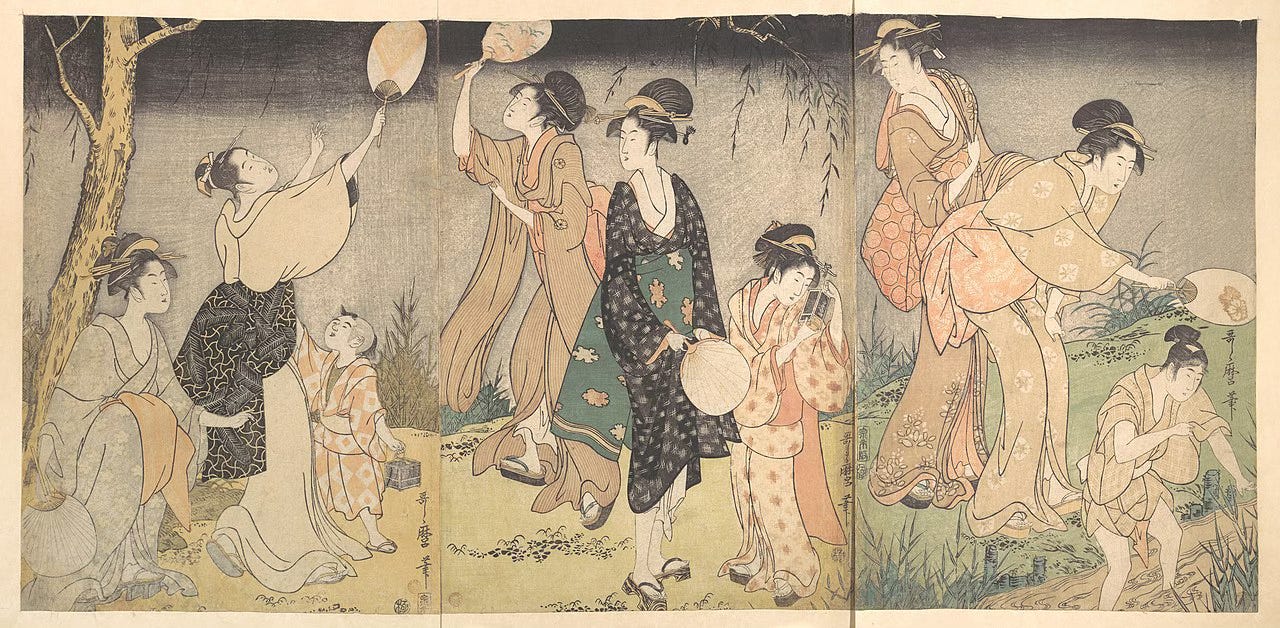
Further afield from us, fireflies have long occupied a far more profound place in human imagination. In Japan, species of the genus Luciola, collectively known as hotaru (蛍), are deeply woven into folklore and literature, associated with love, longing, impermanence and the souls of the dead. Their brief luminous lives became symbols of memory and loss, celebrated in poetry, festivals and films such as Grave of the Fireflies, Isao Takahata’s devastating animated meditation on war, childhood and transience. In places such as Tatsuno Firefly Park and the various Hotaru no Sato (“Villages of Fireflies”) found across the country, entire river systems have been carefully protected from pollution, artificial lighting and overdevelopment in order to preserve the annual displays: evidence of a deep reverence for these insects, which form not merely part of an ecosystem, but part of Japan’s cultural and spiritual landscape.
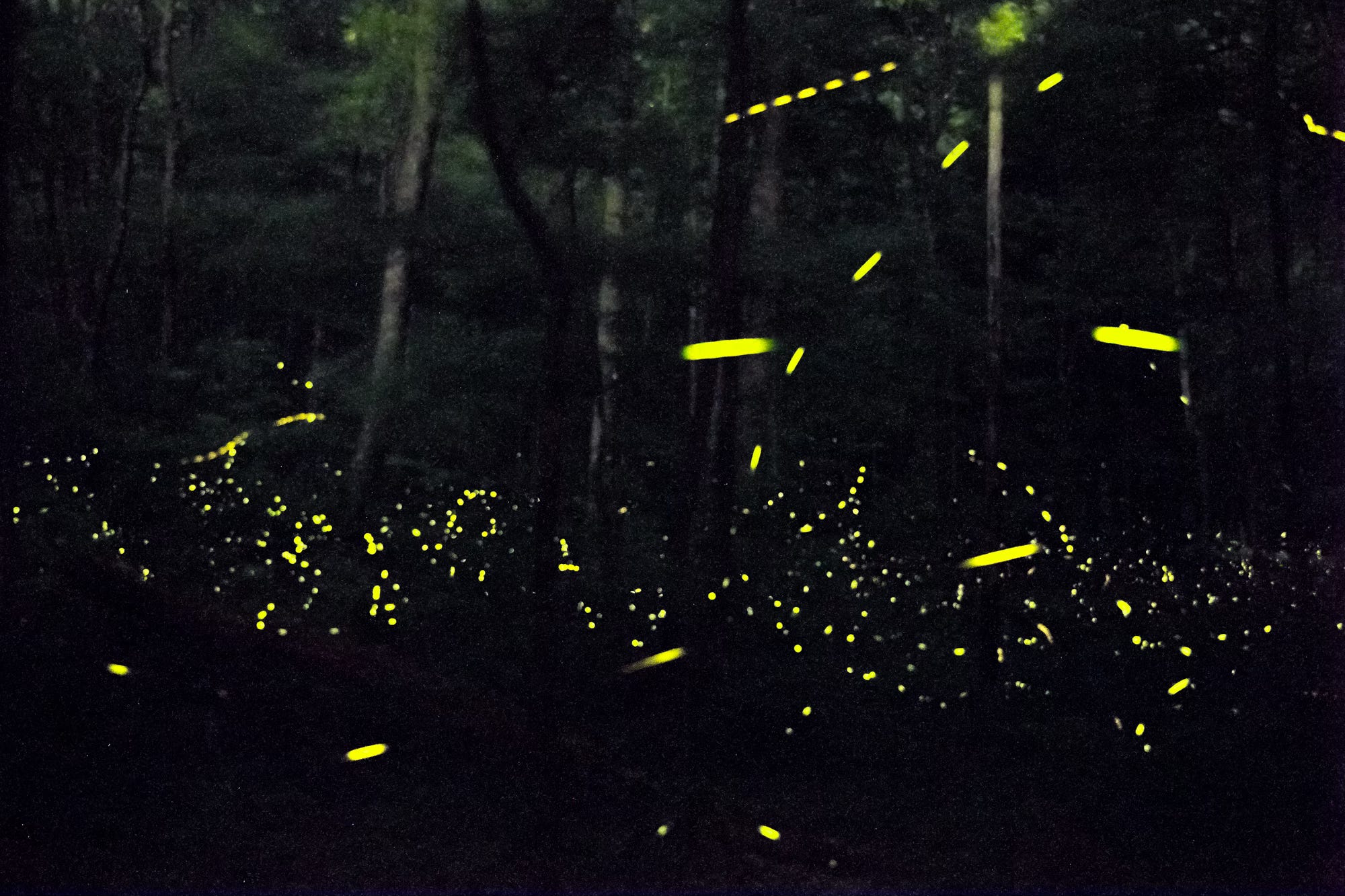
Elsewhere, entire landscapes become transformed by them. Along certain mangrove rivers in Malaysia, especially around Kampung Kuantan, thousands of synchronous fireflies gather in riverside trees, pulsing together so perfectly in rhythm that the surrounding banks appear almost to breathe with light. In the humid forests of the Great Smoky Mountains National Park, another species gathers each summer in one of the world’s most extraordinary bioluminescent displays, where entire hillsides flash in eerie unison during a mating season lasting only a few nights.
What unites all these luminous gatherings, from the Great Smoky Mountains and Tuscan olive groves to Japanese rivers and Malaysian mangroves, is their fragility. Remove darkness, poison the water, simplify the vegetation or flood the night with artificial light, and the signals begin to fail. The lights slowly go out. In Italy, the disappearance of lucciole became symbolic of something larger. Pier Paolo Pasolini famously lamented their vanishing in the 1970s as an emblem of the ecological and spiritual devastation wrought by industrial modernity.
Yet unlike so many ecological losses, darkness can return remarkably quickly. Shield a lamp, dim a road, switch off unnecessary lights and the stars begin to reappear almost immediately. Insects recover, nocturnal migrations stabilise, human sleep improves and energy bills fall. Italy, with its sophisticated lighting industry and existing anti-light-pollution laws, already possesses many of the tools required. What is lacking is not technology, but the willingness to embrace darkness again.
I have always loved darkness. Modern civilisation treats it as an absence, something to be conquered and illuminated, butt it is only in darkness that certain truths become visible. The stars vanish in daylight. Fireflies vanish beneath floodlights. Even beneath the sea, the most extraordinary dives for me were always the night dives, when the reef transformed into another world entirely: colours intensified, hidden creatures emerged from crevices and living sparks drifted through the black water. Daylight reveals surfaces; darkness reveals systems. It is only in darkness that we truly begin to see everything.
Perhaps this is why fireflies move us so deeply. Their light belongs not to the conquest of darkness, but to coexistence with it. They do not erase the night; they converse within it. Modern life increasingly fears darkness, flooding roads, gardens and entire cities with perpetual illumination, as though every shadow concealed some latent danger. Yet in doing so we have not merely banished obscurity, but silenced entire worlds that depended upon it. The stars retreat. Nocturnal migrations falter. Insects vanish from the warm air above summer fields. Little by little, the living fabric of the night begins to unravel and ancient conversations conducted in flashes, scents and sound, grow steadily quieter.
And so, each May, when the first fireflies begin drifting once more beneath the olives, I find myself turning the lights off entirely. Not simply to see them better, but to recover, if only briefly, an older relationship with the night. In the darkness, the grove feels larger, deeper and infinitely more alive. Crickets thrum through the grasses, moths move unseen through the trees and tiny green lanterns drift silently across the blackness. Out of the darkness, everything returns.
With thanks to the excellent Italian firefly conservation resource Lampyridae.it.
Edward Cutler is a writer and organic farmer based in southern Tuscany. His forthcoming book, This Beautiful Country: How Italy’s Nature Shaped Its Culture and Civilisation, will be published in September 2026 by Chelsea Green (UK/US) and Mondadori in Italy.
www.edwardcutler.com
Da piccola vedevo nel giardino dei miei genitori tantissime lucciole, oggi quando riesco a scorgene una nel caos della città mi sembra una magia. Questo articolo mi ha riportata all'infanzia dove crescevo in provincia, dove tutto era più lento e più vero 💚 grazie!
Love this, I have been building some concept notes around the Search for Lost Fireflies in the US and with Re:Wild we are funding some early work on the Similar firefly...I am working with a researcher from the US who actually supported the LUCE project in Italy working with students to improve identification skills and systematics of fireflies in the peninsula.